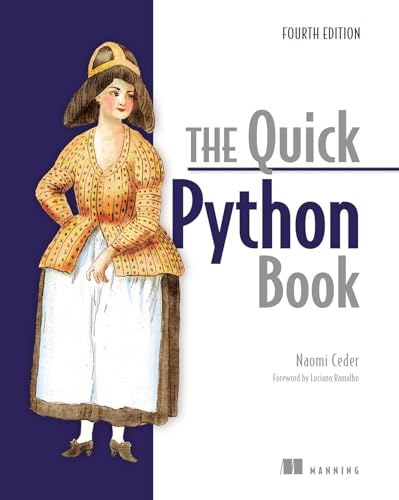
The Quick Python Book, Fourth Edition
*The Quick Python Book, Fourth Edition*, authored by Naomi Ceder, serves as a comprehensive and fast-paced introduction to the Python programming language for intermediate developers. This extensively revised edition updates the classic text for Python 3.13, covering essential syntax, data structures, and best practices while introducing modern advancements in the field. Designed for programmers who are already comfortable with other languages, the book bypasses introductory programming concepts to dive directly into Python's unique features, standard library, and object-oriented capabilities. It aims to help readers write effective code quickly through a balance of detailed language instruction and practical insights. A significant addition to this fourth edition is the integration of generative AI tools into the development workflow. Readers will learn how to utilize AI coding assistants like GitHub Copilot, Google Colab, and ChatGPT to accelerate their work, including practical advice on writing effective prompts. The text is structured to facilitate learning through interactive notebooks, quick-check questions, and end-of-chapter labs that consolidate new skills. From basic data handling and control flow to advanced topics like regular expressions and network data processing, the book provides a thorough grounding for scripting, application programming, and data science tasks. Written by a former Chair of the Python Software Foundation Board of Directors, this guide combines technical depth with the personal touch of a skilled teacher. It covers a wide range of topics across four main parts, moving from absolute basics and core data types to file wrangling and using Python libraries. Whether for system automation, web applications, or backend services, this resource equips developers with the knowledge to read and write Python proficiently. With a foreword by Luciano Ramalho, this edition continues its legacy as a trusted resource for over 100,000 developers looking to master Python and adapt to the evolving landscape of AI-assisted coding.
About the Authors
Naomi Ceder